Let us remember a time when Americans lived up to their ideals and those ideals helped save the world. On June 6, 1944 we set out to free Europe. The invasion began just 3 miles from the little port where the Pilgrims left for the new world. The allies too, carried a gift of freedom.
American soldier Sam Fuller returned on the 40th anniversary to find the Frenchman who saved his life during the D-Day landings.
- Everglades Photographer
Clyde Butcher lives in a wide river of grass. He is determined to save its beauty. One photograph at a time. Butcher is as comfortable in this swamp as any man easing into a bath. He spends his days deep in the Big Cyprus National Preserve searching for what others have not seen. Sometimes the place never seen is the place we simply pass by.
- The Last Unmapped Place
Dave Williams has a job that would frustrate Daniel Boone. He must find 55 surveyor’s benchmarks in a forest bigger than Connecticut. They are the size of a silver dollar.
- A Hat that Starts Fights
Manny Gammage creates hats that would “start a fight in a Wyoming bar.” His motto: “Quality is like buying oats. If you want good, clean oats, you’ve got to pay a fair price. If you want ones that have already run through the horse, that’s a little cheaper.” One of his hats changed Billy Bob Oafley’s life.
- Monks of Waelder, Texas. (Cowboy Monks)
Everything the monks of Waelder, Texas, touch makes a lot of money. A LOT of money. So much for that vow of poverty.
- Robo Legs
We all remember what happened when two lights blinked bright in Boston’s old North Church. Paul Revere rode away and the American Revolution began, but 25 years before that fateful night, John Childs jumped from the same belfry three times, holding a big umbrella with wings, thus surviving one of the world’s first parachute jumps.
Nearly three centuries later, Army Ranger Monty Reed wasn’t so fortunate. He broke his back when a parachute failed to open. After decades of rehabilitation, he made an amazing recovery and then created something for those who cannot walk.
- Put Me In Coach
Lance Hershberger coached high school baseball in Fort Wayne, Indiana. In his spare time, he looked for little kids who’s abilities do not measure up to their love of the game. One year Lance watched four baseball teams tie for the Fort Wayne high school championship. Nearly every player was one he had coached.
- Everglades Photographer
- The Last Unmapped Place
- A Hat that Starts Fights
- Monks of Waelder, Texas. (Cowboy Monks)
- Robo Legs
- Who Created Baseball?
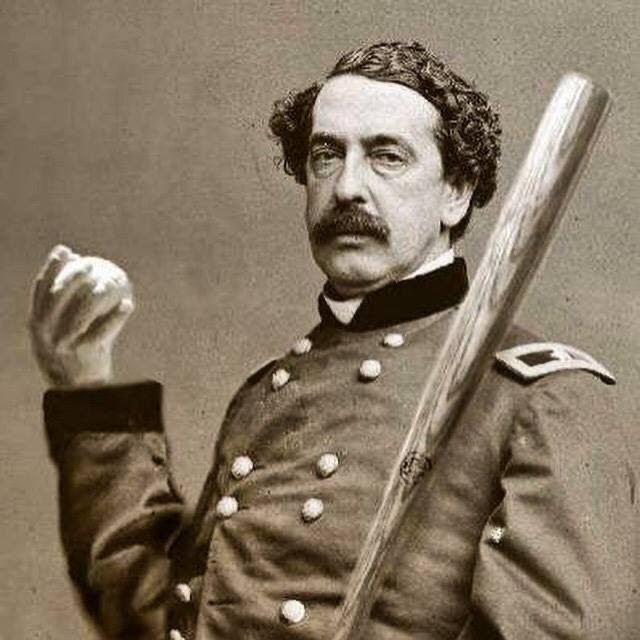
See this guy. Abner Doubleday. Say his name. What comes to mind? Inventor of baseball. Right? Every year, nearly 300,000 people pass through the Baseball Hall of Fame in upstate New York, built to honor this Civil War Hero. Thank Al Spalding for that. He manufactured Sporting equipment and saw dollars draining away when an English employee, Henry Chadwick, pointed out that baseball came from Great Britain. Kids there called it Rounders. Spalding argued the game was one hundred percent American. Chadwick explained that Rounders is played with a bat and ball, a pitcher and a batter who runs counter clockwise around the bases. Case closed. Not quite.

- Cops n’ Cons
Time to play a football classic. No, not the Cotton Bowl. One you may not have seen. In 1977, a few Tulsa police officers saw a Burt Reynold’s movie called “The Longest Yard,” in which a jailed football player organizes a prison team to play a team of guards.
The officers were inspired to stage their own game between police and convicts. The result is Tulsa’s annual Cops-Cons Football Game to benefit Mothers Against Drunk Drivers.
Officer Ron Mayfield, a running back, said the game can have its tense moments. “We meet a lot of guys that we personally have put in jail. It makes for an interesting game, but at the end it’s like old friends” who have learned to laugh together. I was the play by play announcer back then. The memory still makes me smile.
The Cons have two big advantages: Time to practice together – two hours a day, five nights a week – and a high percentage of returning starters. Unless a player is paroled or gets into trouble, he has a lifetime contract.
- Surviving an Earthquake
Betty Kelly still cannot cross a bridge without flinching. Even now. 33 years later. On this day in 1989, Betty and her husband were driving high over San Francisco Bay, just as an Earthquake struck. A section of the Bay Bridge dropped like a deadly trapped door. The Kelly’s honked their horn to warn others. But Anna Annalonghu died. Everything Adeen Murphy owned was 4 flights up a twisted staircase. Adeen had lived through a thousand air raids in World War Two London, so she crossed police barrier and found something she had bought only a week before — $2-thousand dollars worth of Wedgewood China.
- Ballet Dancer
Elliot Feld would hide his dance slippers in a brief case, so his neighbors would think he had an ordinary job. He would become one of America’s finest ballet choreographers, but ballet is still out of the question for most of the kids in his old Brooklyn neighborhood. Too expensive. He did not recruit from the specialized schools for the performing arts. He traveled to the public classrooms to look for ordinary 8 year olds with potential.
- The Last Train Robber
I found Joe Newton on a dark night out on a dirt road, down wind from the raccoons, behind the bloodhounds. Newton was one of the most successful and least known train robbers in American history. Least known and now the last.