Legend is a word we use easily. A team wins thirteen games – legendary. A guy tosses one good season of baseball – he’s a legend. A single Saturday afternoon thrill – legendary. But what of the legends who build quietly, year in and year out, until they touch us all. For sixty summers Jimmy Porter gently coaxed the kids of Carollton, Texas, to play the game he loved.
A new way to bond with your boss. Forget golf. Go surfing. Out in San Diego, opportunity comes in waves. More than 300 biomedical companies now have people in that surf around San Diego. The best ideas don’t always come in labs under artificial light. Out here they can meet the kind of people who are determined not to follow the same path, but leave a wake.
Clyde Butcher lives in a wide river of grass. He is determined to save its beauty. One photograph at a time. Butcher is as comfortable in this swamp as any man easing into a bath. He spends his days deep in the Big Cyprus National Preserve searching for what others have not seen. Sometimes the place never seen is the place we simply pass by.
Dave Williams has a job that would frustrate Daniel Boone. He must find 55 surveyor’s benchmarks in a forest bigger than Connecticut. They are the size of a silver dollar.
Manny Gammage creates hats that would “start a fight in a Wyoming bar.” His motto: “Quality is like buying oats. If you want good, clean oats, you’ve got to pay a fair price. If you want ones that have already run through the horse, that’s a little cheaper.” One of his hats changed Billy Bob Oafley’s life.
We all remember what happened when two lights blinked bright in Boston’s old North Church. Paul Revere rode away and the American Revolution began, but 25 years before that fateful night, John Childs jumped from the same belfry three times, holding a big umbrella with wings, thus surviving one of the world’s first parachute jumps.
Nearly three centuries later, Army Ranger Monty Reed wasn’t so fortunate. He broke his back when a parachute failed to open. After decades of rehabilitation, he made an amazing recovery and then created something for those who cannot walk.
Lance Hershberger coached high school baseball in Fort Wayne, Indiana. In his spare time, he looked for little kids who’s abilities do not measure up to their love of the game. One year Lance watched four baseball teams tie for the Fort Wayne high school championship. Nearly every player was one he had coached.
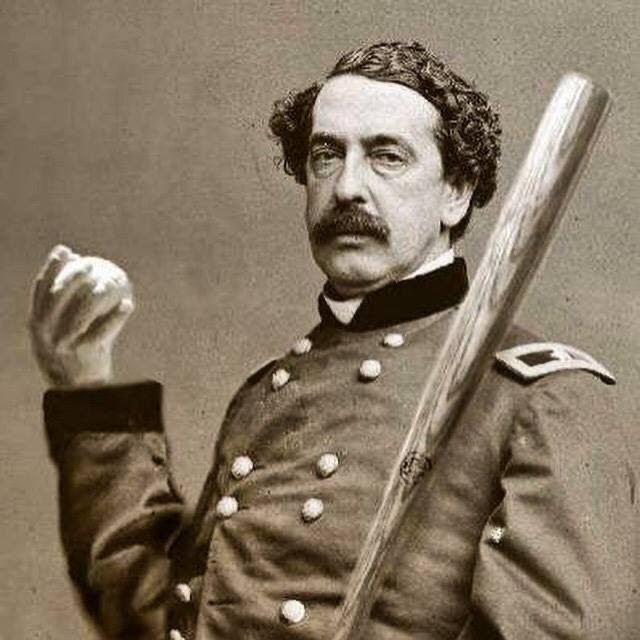
See this guy. Abner Doubleday. Say his name. What comes to mind? Inventor of baseball. Right? Every year, nearly 300,000 people pass through the Baseball Hall of Fame in upstate New York, built to honor this Civil War Hero. Thank Al Spalding for that. He manufactured Sporting equipment and saw dollars draining away when an English employee, Henry Chadwick, pointed out that baseball came from Great Britain. Kids there called it Rounders. Spalding argued the game was one hundred percent American. Chadwick explained that Rounders is played with a bat and ball, a pitcher and a batter who runs counter clockwise around the bases. Case closed. Not quite.
Time to play a football classic. No, not the Cotton Bowl. One you may not have seen. In 1977, a few Tulsa police officers saw a Burt Reynold’s movie called “The Longest Yard,” in which a jailed football player organizes a prison team to play a team of guards.
The officers were inspired to stage their own game between police and convicts. The result is Tulsa’s annual Cops-Cons Football Game to benefit Mothers Against Drunk Drivers.
Officer Ron Mayfield, a running back, said the game can have its tense moments. “We meet a lot of guys that we personally have put in jail. It makes for an interesting game, but at the end it’s like old friends” who have learned to laugh together. I was the play by play announcer back then. The memory still makes me smile.
The Cons have two big advantages: Time to practice together – two hours a day, five nights a week – and a high percentage of returning starters. Unless a player is paroled or gets into trouble, he has a lifetime contract.
Betty Kelly still cannot cross a bridge without flinching. Even now. 33 years later. On this day in 1989, Betty and her husband were driving high over San Francisco Bay, just as an Earthquake struck. A section of the Bay Bridge dropped like a deadly trapped door. The Kelly’s honked their horn to warn others. But Anna Annalonghu died. Everything Adeen Murphy owned was 4 flights up a twisted staircase. Adeen had lived through a thousand air raids in World War Two London, so she crossed police barrier and found something she had bought only a week before — $2-thousand dollars worth of Wedgewood China.
Elliot Feld would hide his dance slippers in a brief case, so his neighbors would think he had an ordinary job. He would become one of America’s finest ballet choreographers, but ballet is still out of the question for most of the kids in his old Brooklyn neighborhood. Too expensive. He did not recruit from the specialized schools for the performing arts. He traveled to the public classrooms to look for ordinary 8 year olds with potential.
I found Joe Newton on a dark night out on a dirt road, down wind from the raccoons, behind the bloodhounds. Newton was one of the most successful and least known train robbers in American history. Least known and now the last.
The only journalism course Norris Alfred ever took, he failed. In 1980, he was nominated for a Pulitzer prize. This is what he wrote:
“The concept of progress has a firm hold. We are on the march from Worse to Better. From Cruelty to Compassion. With our bought vote, we cast a hope that the next leader will take us where we should go, confidently heading the parade of progress in an armored limousine.”
Rock n Roll was born behind the glass windows of a jukebox. An evening’s pleasure for a pocket full of change. Eventually, Rock ’n Roll got its name on one of those glass boxes. Or so we thought, until we met the man behind that famous signature. Rock-ola is David Rockola. He’d been serving up hits for half a century. At 90, he was still making jukeboxes.
At 34 Paul Lutus wanted to get a way from it all, while taking it all with him. He built a cabin in the wilderness with no running water, no telephone — just a cat for company. A cat and a computer. Lutus wanted to see if he could work as well in the woods as he did in the city. He worked better. The computer programmer was a consultant for NASA before he went into the wilderness. He helped get the Viking Space probe to Mars. In his tiny shack, miles from the nearest road, Lutus created a new lighting system that is now part of the space shuttle.
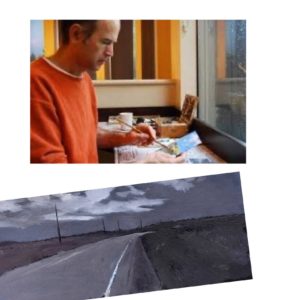
Lynn Ash was a successful art. He painted memories from America’s past. One day, the canvas of his mind went blank. For more than a decade, he did not paint at all, until he sold his home in Tampa, built a cabin in a swamp and designed a sanctuary for injured animals. The wildlife he nurtured unlocked his imagination. Every artist dips into his own soul and paints his own nature.
Some folks think New York City has too many stories and too many strangers. In fact, it is a town of tight little neighborhoods where the familiar is cherished. Since 1910 the Broadway Barbershop had been a wonderful window on the neighbors of New York City. Kay Demetrios did not miss a day of work in 40 years. He’d never been on time. He was always an hour and a half early. Customers loved him so much, one walked 60 blocks every morning for a shave.
Dave Densmore fishes for words – upon a sea that took his family. That memory is written on his face. For twenty years he tried to write a poem about his family’s tragedy. Dave sought words like he searched for salmon.
Dr. Leila Denmark opened her medical practice in 1928. She was Atlanta’s first female pediatrician and was STILL healing children until her retirement at 104. That retirement lasted a decade. She lived to be 114, the oldest doctor in the world.
Maurice Gordon can still hear the muffled crack of dry thunder. The memories of war. He joined 10-thousand other Americans and headed to the land of the Pharaoh’s. They formed a Jewish Legion, the first in nearly 2-thousand years to fight for a homeland.
At the Dudley Dome in El Paso, fans used to tip Diablos baseball players for good hitting. A guy could make $160 bucks by leaning into the stands for a hug. The 1980 Double-A farm team of the California Angels was in last place, but it attracted more playing customers than any other team in the history of the minor leagues.
Avidis Zildjian lured good workers to his company in suburban Boston with a simple promise. “You take care of my family and I’ll take care of yours.” That pledge has remained unbroken for more than eighty years.
When was the last time you heard a factory worker say, “I’ve been here 26 years and I’ve never seen a layoff.”
The 70 workers on Zildjian’s production line are confident they will always have good-paying jobs, because no one has to compete with a machine. Whenever a task was automated, the employee who performed it is trained for another one worth equivalent pay.
Ausbon Sargent grew up in a time when only one American in 10 got to go to high school. Like most farm boys, Ausbon never had much money, but neighbors saw something special in him. Paid his tuition to a private academy. He spent his life there, as a care taker. The school fell on hard times. Was about to sell off the town common. Ausbon quietly bought it and gave it back. He was 96.
I have now lived more than three quarters of a century. 80 is one of those “0h Sh*t, I can’t believe I’m that old” birthdays. Filled with memories. I have a lot, as all of you who read my posts, can attest. NBC News once hired a red headed kid with a different approach to stories. While most correspondents focused on life’s flat tires, I started looking for something far more difficult to find – what kept the other tires rolling. This was no solitary pursuit. A little band of storytellers traveled with me. We worked the neglected streets of our cities, the small towns and dirt roads, searching for folks you should meet. In the days before cell phones and satellite radios, we sometimes linked our caravan of cars with a wireless microphone and speakers so I could read “nap time” stories to the crew. Fortunately, no one fell asleep as we bounced down all those back roads. Shunning superhighways, chain restaurants, and crowds of reporters, we chatted with the locals and listened carefully to people who are practically invisible, the ones who change our lives but don’t take time to tweet and tell us about it. https://youtu.be/IYI7JLip6RQ
Bernice Ende traveled her own path. Over 30,000 miles in the saddle. The retired ballet teacher criss crossed the country for 16 years at 3 miles an hour. No cell phone. Alone. She encouraged women to be who they wanted to be, to listen to their own voice. Bernice died on this date three years ago a month shy of her 67th birthday.This is what she wrote shortly before her passing.
“Time is not ticking away – your life is ticking away. It’s important to know where you are going and why you are headed in that direction. But most importantly does what you are doing bring you a sense of purpose? These questions rise to the top if we are seeking a fully-fledged life. Three miles an hour is plenty fast as far as I am concerned. If you can, slow down, enjoy this time as a gift. Make this a time to discover, learn and know something new about yourself. If taking a fence apart is necessary to move forward – do it. But always respectfully put it back together. Don’t let fences, road blocks or any obstacles keep you from moving forward, find opportunity, not problems in these challenging time. If you make life a race remember what the finish line holds.”
Welcome to Higley Field, an old time ball park painstakingly recreated in Ed Simonton’s backyard. Neighbors gather to play the game of their youth. No. Not baseball. Wiffle ball. There are no umpires to bubble the blood. Catchers call balls and strikes and the majority determines who is safe or out. Higley Field is an attempt to catch what they don’t bottle these days. Here, folks can become legends in their spare time.
Whenever Herman Coussens wants fish, he just floats out on his farm pond and calls them for dinner — theirs and his. He doesn’t have to bait a hook. They come when this catfish whisperer calls.
Milt Siefert was running a bit late. His patient’s appointment was for 10:30. It was noon. But folks in Excelsior, Minnesota, have a way to correct poor service. Dr. Siefert formed a patient advisory council in 1974 and has been meeting regularly with the members ever since. They do more than gripe. His patients help set his fees. Even his salary. One year, he made less than a school teacher. But, that’s improving because patients now help him collect his bills.
John Coffer turned his back on modern times to wander America in a wagon pulled by oxen, stopping only to take portraits with his antique camera. Coffer traveled at two and a half miles an hour for five years. 25 states. 10-thousand miles. He crisscrossed America so slowly, everywhere he went, folks joked he was a temporary resident. Coffer captured old fashioned images of modern America. https://youtu.be/V00r3nmtEZk
Jerry Owens surrounds himself with the sounds he likes to hear. Eating. He runs the Black Beauty Ranch, a place with a storybook name built from a nightmare. It is a haven for nearly 5-thousand animals each year. They are rescued from ghettos of neglect. There are burros pulled from the Grand Canyon. Goats from an island used for Navy bombing practice. And horses whose previous owners only fed them when they rode them. Owens is a one man army against cruelty, a Texas constable who figured long ago that people who hurt animals eventually will hurt people.
A new way to bond with your boss. Forget golf. Go surfing. Out in San Diego, opportunity comes in waves. More than 300 biomedical companies now have people in that surf around San Diego. The best ideas don’t always come in labs under artificial light. Out here they can meet the kind of people who are determined not to follow the same path, but leave a wake.
Clyde Butcher lives in a wide river of grass. He is determined to save its beauty. One photograph at a time. Butcher is as comfortable in this swamp as any man easing into a bath. He spends his days deep in the Big Cyprus National Preserve searching for what others have not seen. Sometimes the place never seen is the place we simply pass by.
Dave Williams has a job that would frustrate Daniel Boone. He must find 55 surveyor’s benchmarks in a forest bigger than Connecticut. They are the size of a silver dollar.
Manny Gammage creates hats that would “start a fight in a Wyoming bar.” His motto: “Quality is like buying oats. If you want good, clean oats, you’ve got to pay a fair price. If you want ones that have already run through the horse, that’s a little cheaper.” One of his hats changed Billy Bob Oafley’s life.
We all remember what happened when two lights blinked bright in Boston’s old North Church. Paul Revere rode away and the American Revolution began, but 25 years before that fateful night, John Childs jumped from the same belfry three times, holding a big umbrella with wings, thus surviving one of the world’s first parachute jumps.
Nearly three centuries later, Army Ranger Monty Reed wasn’t so fortunate. He broke his back when a parachute failed to open. After decades of rehabilitation, he made an amazing recovery and then created something for those who cannot walk.
Lance Hershberger coached high school baseball in Fort Wayne, Indiana. In his spare time, he looked for little kids who’s abilities do not measure up to their love of the game. One year Lance watched four baseball teams tie for the Fort Wayne high school championship. Nearly every player was one he had coached.
See this guy. Abner Doubleday. Say his name. What comes to mind? Inventor of baseball. Right? Every year, nearly 300,000 people pass through the Baseball Hall of Fame in upstate New York, built to honor this Civil War Hero. Thank Al Spalding for that. He manufactured Sporting equipment and saw dollars draining away when an English employee, Henry Chadwick, pointed out that baseball came from Great Britain. Kids there called it Rounders. Spalding argued the game was one hundred percent American. Chadwick explained that Rounders is played with a bat and ball, a pitcher and a batter who runs counter clockwise around the bases. Case closed. Not quite.
Time to play a football classic. No, not the Cotton Bowl. One you may not have seen. In 1977, a few Tulsa police officers saw a Burt Reynold’s movie called “The Longest Yard,” in which a jailed football player organizes a prison team to play a team of guards.
The officers were inspired to stage their own game between police and convicts. The result is Tulsa’s annual Cops-Cons Football Game to benefit Mothers Against Drunk Drivers.
Officer Ron Mayfield, a running back, said the game can have its tense moments. “We meet a lot of guys that we personally have put in jail. It makes for an interesting game, but at the end it’s like old friends” who have learned to laugh together. I was the play by play announcer back then. The memory still makes me smile.
The Cons have two big advantages: Time to practice together – two hours a day, five nights a week – and a high percentage of returning starters. Unless a player is paroled or gets into trouble, he has a lifetime contract.
Betty Kelly still cannot cross a bridge without flinching. Even now. 33 years later. On this day in 1989, Betty and her husband were driving high over San Francisco Bay, just as an Earthquake struck. A section of the Bay Bridge dropped like a deadly trapped door. The Kelly’s honked their horn to warn others. But Anna Annalonghu died. Everything Adeen Murphy owned was 4 flights up a twisted staircase. Adeen had lived through a thousand air raids in World War Two London, so she crossed police barrier and found something she had bought only a week before — $2-thousand dollars worth of Wedgewood China.
Elliot Feld would hide his dance slippers in a brief case, so his neighbors would think he had an ordinary job. He would become one of America’s finest ballet choreographers, but ballet is still out of the question for most of the kids in his old Brooklyn neighborhood. Too expensive. He did not recruit from the specialized schools for the performing arts. He traveled to the public classrooms to look for ordinary 8 year olds with potential.
I found Joe Newton on a dark night out on a dirt road, down wind from the raccoons, behind the bloodhounds. Newton was one of the most successful and least known train robbers in American history. Least known and now the last.
The only journalism course Norris Alfred ever took, he failed. In 1980, he was nominated for a Pulitzer prize. This is what he wrote:
“The concept of progress has a firm hold. We are on the march from Worse to Better. From Cruelty to Compassion. With our bought vote, we cast a hope that the next leader will take us where we should go, confidently heading the parade of progress in an armored limousine.”
Rock n Roll was born behind the glass windows of a jukebox. An evening’s pleasure for a pocket full of change. Eventually, Rock ’n Roll got its name on one of those glass boxes. Or so we thought, until we met the man behind that famous signature. Rock-ola is David Rockola. He’d been serving up hits for half a century. At 90, he was still making jukeboxes.
At 34 Paul Lutus wanted to get a way from it all, while taking it all with him. He built a cabin in the wilderness with no running water, no telephone — just a cat for company. A cat and a computer. Lutus wanted to see if he could work as well in the woods as he did in the city. He worked better. The computer programmer was a consultant for NASA before he went into the wilderness. He helped get the Viking Space probe to Mars. In his tiny shack, miles from the nearest road, Lutus created a new lighting system that is now part of the space shuttle.
Lynn Ash was a successful art. He painted memories from America’s past. One day, the canvas of his mind went blank. For more than a decade, he did not paint at all, until he sold his home in Tampa, built a cabin in a swamp and designed a sanctuary for injured animals. The wildlife he nurtured unlocked his imagination. Every artist dips into his own soul and paints his own nature.
Some folks think New York City has too many stories and too many strangers. In fact, it is a town of tight little neighborhoods where the familiar is cherished. Since 1910 the Broadway Barbershop had been a wonderful window on the neighbors of New York City. Kay Demetrios did not miss a day of work in 40 years. He’d never been on time. He was always an hour and a half early. Customers loved him so much, one walked 60 blocks every morning for a shave.
Dave Densmore fishes for words – upon a sea that took his family. That memory is written on his face. For twenty years he tried to write a poem about his family’s tragedy. Dave sought words like he searched for salmon.
Dr. Leila Denmark opened her medical practice in 1928. She was Atlanta’s first female pediatrician and was STILL healing children until her retirement at 104. That retirement lasted a decade. She lived to be 114, the oldest doctor in the world.
Maurice Gordon can still hear the muffled crack of dry thunder. The memories of war. He joined 10-thousand other Americans and headed to the land of the Pharaoh’s. They formed a Jewish Legion, the first in nearly 2-thousand years to fight for a homeland.
At the Dudley Dome in El Paso, fans used to tip Diablos baseball players for good hitting. A guy could make $160 bucks by leaning into the stands for a hug. The 1980 Double-A farm team of the California Angels was in last place, but it attracted more playing customers than any other team in the history of the minor leagues.
Avidis Zildjian lured good workers to his company in suburban Boston with a simple promise. “You take care of my family and I’ll take care of yours.” That pledge has remained unbroken for more than eighty years.
When was the last time you heard a factory worker say, “I’ve been here 26 years and I’ve never seen a layoff.”
The 70 workers on Zildjian’s production line are confident they will always have good-paying jobs, because no one has to compete with a machine. Whenever a task was automated, the employee who performed it is trained for another one worth equivalent pay.
Ausbon Sargent grew up in a time when only one American in 10 got to go to high school. Like most farm boys, Ausbon never had much money, but neighbors saw something special in him. Paid his tuition to a private academy. He spent his life there, as a care taker. The school fell on hard times. Was about to sell off the town common. Ausbon quietly bought it and gave it back. He was 96.
I have now lived more than three quarters of a century. 80 is one of those “0h Sh*t, I can’t believe I’m that old” birthdays. Filled with memories. I have a lot, as all of you who read my posts, can attest. NBC News once hired a red headed kid with a different approach to stories. While most correspondents focused on life’s flat tires, I started looking for something far more difficult to find – what kept the other tires rolling. This was no solitary pursuit. A little band of storytellers traveled with me. We worked the neglected streets of our cities, the small towns and dirt roads, searching for folks you should meet. In the days before cell phones and satellite radios, we sometimes linked our caravan of cars with a wireless microphone and speakers so I could read “nap time” stories to the crew. Fortunately, no one fell asleep as we bounced down all those back roads. Shunning superhighways, chain restaurants, and crowds of reporters, we chatted with the locals and listened carefully to people who are practically invisible, the ones who change our lives but don’t take time to tweet and tell us about it. https://youtu.be/IYI7JLip6RQ
Bernice Ende traveled her own path. Over 30,000 miles in the saddle. The retired ballet teacher criss crossed the country for 16 years at 3 miles an hour. No cell phone. Alone. She encouraged women to be who they wanted to be, to listen to their own voice. Bernice died on this date three years ago a month shy of her 67th birthday.This is what she wrote shortly before her passing.
“Time is not ticking away – your life is ticking away. It’s important to know where you are going and why you are headed in that direction. But most importantly does what you are doing bring you a sense of purpose? These questions rise to the top if we are seeking a fully-fledged life. Three miles an hour is plenty fast as far as I am concerned. If you can, slow down, enjoy this time as a gift. Make this a time to discover, learn and know something new about yourself. If taking a fence apart is necessary to move forward – do it. But always respectfully put it back together. Don’t let fences, road blocks or any obstacles keep you from moving forward, find opportunity, not problems in these challenging time. If you make life a race remember what the finish line holds.”
Welcome to Higley Field, an old time ball park painstakingly recreated in Ed Simonton’s backyard. Neighbors gather to play the game of their youth. No. Not baseball. Wiffle ball. There are no umpires to bubble the blood. Catchers call balls and strikes and the majority determines who is safe or out. Higley Field is an attempt to catch what they don’t bottle these days. Here, folks can become legends in their spare time.
Whenever Herman Coussens wants fish, he just floats out on his farm pond and calls them for dinner — theirs and his. He doesn’t have to bait a hook. They come when this catfish whisperer calls.
Milt Siefert was running a bit late. His patient’s appointment was for 10:30. It was noon. But folks in Excelsior, Minnesota, have a way to correct poor service. Dr. Siefert formed a patient advisory council in 1974 and has been meeting regularly with the members ever since. They do more than gripe. His patients help set his fees. Even his salary. One year, he made less than a school teacher. But, that’s improving because patients now help him collect his bills.
John Coffer turned his back on modern times to wander America in a wagon pulled by oxen, stopping only to take portraits with his antique camera. Coffer traveled at two and a half miles an hour for five years. 25 states. 10-thousand miles. He crisscrossed America so slowly, everywhere he went, folks joked he was a temporary resident. Coffer captured old fashioned images of modern America. https://youtu.be/V00r3nmtEZk
Jerry Owens surrounds himself with the sounds he likes to hear. Eating. He runs the Black Beauty Ranch, a place with a storybook name built from a nightmare. It is a haven for nearly 5-thousand animals each year. They are rescued from ghettos of neglect. There are burros pulled from the Grand Canyon. Goats from an island used for Navy bombing practice. And horses whose previous owners only fed them when they rode them. Owens is a one man army against cruelty, a Texas constable who figured long ago that people who hurt animals eventually will hurt people.
Down in the trenches of big time football, you don’t expect to find a brain trust. During the 1970’s and 80’s Nebraska had more academic all Americans than Stanford or Notre Dame or UCLA. The reason? Football players point to Ursala Walsh, who gave up life as a nun to teach the Cornhuskers how to study. How does a Dominican nun with 20 years experience become a football coach? She began back in the segregation days, checking out library books for black children. They were not allowed. She earned 3 masters degree and came to Nebraska looking for a PhD and a new way of life.
A lot of us lead one life, but dream of another. By day, Jennifer Wilson is a scientist in Austin, Texas, studying water quality. At night, she becomes a meanie.
Her comic book alter ego tries to squash players like bugs. Jennifer is part of the fastest growing sport in America. All-girl roller derby leagues are sprouting up in cities big and small. 42 in just 5 years.
At the rink they get the chance to be something entirely different than they are in their daily lives. All of us wonder from time to time how the world would see us if we presented a different face. Roller derby women play not just for the love of the game, but for what it lets them become.
We tend to think of classical music as big city music. Oh, there may be a snatch or two out in the country, but most often classical music is something big city folks bus to the boondocks on warm summer nights. That’s the image. In Brattleboro, Vermont, it is wrong. Some of the finest classical singers in America live in this village.
Have we ever said “Happy New” with such a sense of relief? Been a tough year. We all know what is, what ought to be. Few remain who remember what was. I recall a 1988 New Year celebration. It was a couple of beers before closing and the boys down at Brandy’s bar were lost on Memory Lane. John Sanderson was a bit fuzzy. He forgot the title of his favorite song. No problem today. Just ask Siri. Back then, Siri hadn’t been born yet. He had to rely on a human jukebox to help him find it.
Some farmers have been searching for a tractor that doesn’t need oil, a power source that could reproduce itself, was easy to repair and burn home grown fuel. Jim Gulbranson has a tractor that does all that and even fertilizes the soil. It’s called the horse. Gulbranson is part of a small, but growing number of farmers who quietly traded their tractors for plow horses. Nostalgia has nothing to do with it. Gulbranson can make more money farming with horses than he can with tractors. It takes him longer to do his work, but doesn’t have to pay the interest on a half million dollars worth of farm machinery or the mortgage for more land to make that machinery worthwhile. He has found that he can live as comfortably as his neighbor on a farm that is one sixth the size.
For some folks, Saturday night in Dallas means Willie and Waylon and the Cotton Eyed Joe. Don Jackson wants to change all that. Each year, when the New York Metropolitan Opera comes to town, Jackson sweeps through the city, convincing dozens of cowboys to become moving scenery, opera extras, so that a chorus of ten will look like a cast of thousands.
Polo is the sport of playboys and kings. And — a man who spreads asphalt. Glen Waterson is captain of an usual blue collar polo team. His players include a construction worker, a school teacher, a black smith and a 12-year-old rookie. They have penetrated the preserve of privilege and wealth, competing on a field that Waterson keeps in shape with a borrowed front loader. This is probably as good a definition of Democracy as any. After the games, the blue bloods and the good ol’ boys are the same.
Jamie James was the only postman in the country who still delivered the mail, house to house, by boat. Six days a week, Jamie churned the remote coastal creeks of southern Alabama. He made his 25 mile run in a boat not much bigger than a bathtub. Low hanging branches near shore kept him from using a more comfortable conveyance. His neighbors, the 175 families who depended on him, say he came when others did not, conveying the news as well as the mail.
Daufuskie Island, South Carolina, is a little piece of sand and trees near Savannah, Georgia. A thousand people once lived there, until the oyster beds died and the forest grew back. By the 1980’s there were only 85. There were no paved roads. No street lights. No bridges to the outside world. The island was so remote, the mind can be your best friend. Only the very old and very young lived there. Teenagers moved to the mainland to finish there education. The island’s elementary school had 11 kids. They put together a magazine of their thoughts. Not so unusual really, except the publisher, Shannon Wilkinson, who was working on a grant from the South Carolina Arts Commission, printed 800 copies by mistake. All 800 were sold by word of mouth, nationwide, in less than ten weeks.
There was a time when television wrestling shows in Memphis, Tennessee, pulled in more viewers than 60 Minutes. They were in TV’s Top Ten. That called for some study. College students in Blytheville, Arkansas, did just that.
Out where the mountains spill their boulders in the sun, flies sing out on nylon wire and catch a bit of heaven. Rich McIntyre is one of those blessed folks who gets to play where he works. He and his wife Sandy started a company to restore damaged trout streams. His small staff of scientists and engineers don’t just restock streams. They rebuild them, so that native fish will return naturally to Montana.
We’ve got better medicine these days, but perhaps something has been lost along the way. There’s a doctor who’s trying to bring back that personal touch. Dr. Jim Anderson drives the office to his patients. “I get less for a house call than an Airconditioning repairman,” he smiles. He does his own repairs on the mobile clinic to keep patient costs low.
The Alonso’s lost their mother during the 9/11 attack in 2001. Janet went to work at the World Trade Center that morning and never returned. Her husband, Robert, was left to care for a 2-year-old daughter and a baby boy with Down syndrome.
Five years later, the Alonso’s spent that 9/11 anniversary in the park, near a memorial that their neighbors built to Janet and all the other parents from their New York City suburb who went to work that day but never came home.
Robby wandered to a wall filled with names as his father and sister played catch nearby. “Right here,” he said, pointing to Janet Alonso’s name etched in marble.
“This was my mommy.”
The little boy leaned over and scraped his fingers back and forth across his mother’s name. His father watched, then rubbed his own hands together, as if he could scour away painful thoughts.
Robby drew his fingers to his mouth, kissed them and gently pressed them on his mother’s name. “Mama,” he whispered.
We all think about 9/11 once a year. The Alonsos live it every day.
Most people only witnessed the tragic events of 9/11. It was my fate to live it. I moved to New York City at the beginning of the century to work full time for the TODAY Show. A year later, I was standing outside a little chapel that survived the hell that leveled skyscrapers of concrete and steel.
Terrorists had crashed planes into the World Trade Center. A dozen modern buildings toppled all around, but St. Paul’s — pieced together with brick and timber — stood without so much as a broken window.
The Rev. Daniel Matthews, rector of the parish of Trinity Church, walked with me through the church’s graveyard, which was covered in ash. The dust of the dead had settled in the chapel cemetery.
Matthews stopped to dust off a headstone. “You know what everyone in the neighborhood is calling St. Paul’s, don’t you? The Little Chapel That Stood.” He looked up and smiled.
“The most astounding thing for me was not the soot and the dust, but the paper,” he continued. “There must have been 10 million pieces. Everybody’s desk wound up flying out the window.”
When Stan Smagala was born, some football teams still wore leather helmets. At 43 he finally made the team. At the time, he became the oldest college football player in the country. To be able to play, Stan set aside his successful insurance business and became a full time student at Moraine Valley Community. The campus malt shop had changed a bit in 23 years, but not Stan. He was convinced he could still play football. He practiced with his son until he could run 40 yards in 4.6 seconds. Stan made the team, but he broke his ribs, jammed two fingers and sprained his ankle. Football isn’t his only passion. He likes to stay up until 4 in the morning, playing base in a band. Stan showed up for this first game four hours later.
The Alonso’s lost their mother during the 9/11 attack in 2001. Janet went to work at the World Trade Center that morning and never returned. Robert was left to care for a 2-year-old daughter and a baby boy with Down syndrome.
“If I was to tell you I did this by myself, I’d be a liar; I’d be a flat-out liar,” Robert said. “I got my mom, my aunt, my pop to help.”
But he never returned to work at the pizza place he owned in Stony Point, New York. His family substituted for him. “I owe it to my children to be around,” Robert explained. “If I buried my grief in work, my kids would lose both their parents.”
Americans open their hearts and wallets all the time, but rarely do we hear about what the world gives to us and that seems just as important. On the eve of 9/11 there were some villages in Newfoundland, Canada, where unemployment hovered as high as fifty percent, but that remote island in the North Atlantic—Canada’s poorest province—set a mark for charity, worthy of the history books. I was one of the first to tell their story, traveling to Newfoundland as winter set in. Later, it became a hit Broadway musical.
LET’S MEET THE REAL PEOPLE WHO HELPED US IN THAT DARK HOUR.
You ever wonder why cowboys seldom sing songs about a bus? Buses fill the lonesome spaces the stage coach left behind. Yet, there are no tales of Bus drivers derring-do. No teary eyed nostalgia. Bus drivers may not have settled the west, but they sure move it around.
The autumn of life brings choices. Decisions. Emil Kech was 73. Age was beginning to nag him like a bad cold. An arthritic ankle threatened to lock Keck out of the forest he loves. Emil and his wife Penny were the only workers in the U.S. Forest Service who lived full time in the wilderness.
There’s a group of kids from a tough neighborhood who stand out from the rest. They wear ties and are clean shaven — all because of an unassuming teacher named Bob Salisbury. Each day, he teaches six special education classes. After school he coaches basketball. Works hardest with those who will never be stars.
Josh Powell was born in Kentucky hill country and raised on a farm. He worked his way through law school in Atlanta, landed a job with one of the city’s best known law firms and then gave it all up to run a one-man sawmill.
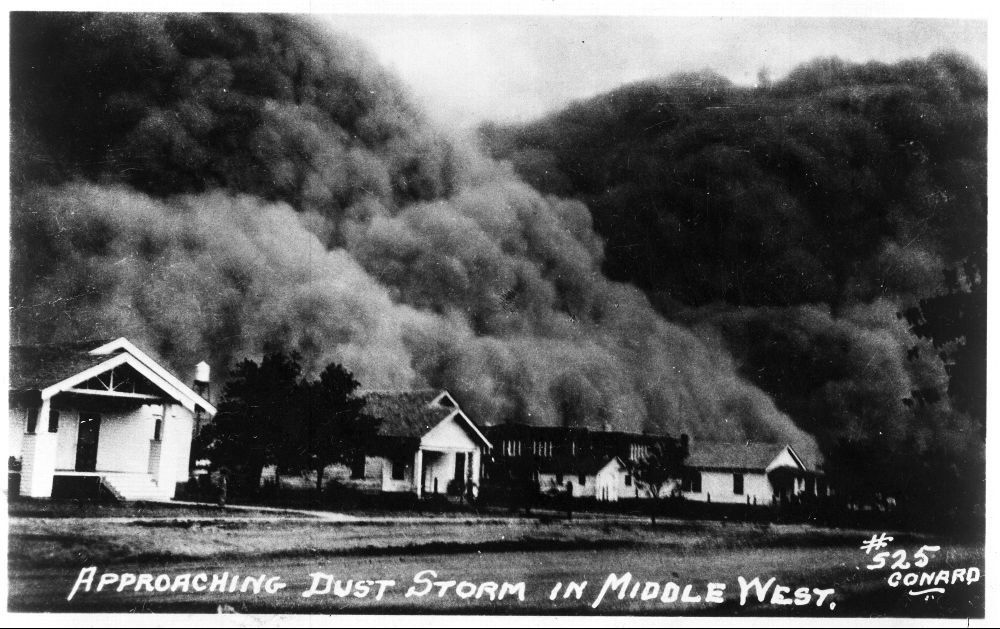
The Great Depression did not begin with the Stock Market Crash. It began with dust. Dust that swept from a hundred million acres. Texas to Montana. Day after day for 10 years. It fell on the Great Plains like a coffee colored snow. Killing cattle and covering crops. 12 million tons of dust fell on Chicago. 4 pounds for every person in the city. The rest soared on toward the Atlantic. Ships 300 miles east of Philadelphia had dust on their decks. Most farm families moved to California, but some stayed. And survived.
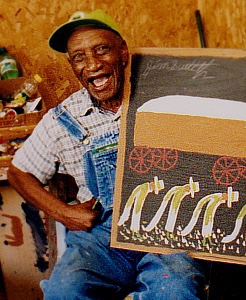
Jimmy Lee Suddeth drew his first picture in the dirt. It washed he away with the evening rains. He never had time for formal training. Never went to town for art supplies. He made his own from nature. Now his paintings, made entirely of natural material, hang in art galleries and fetch big bucks.
Florence Thompson’s picture haunted the nation. Her grandson saw the photograph hanging inside a G.I.’s tent in Vietnam. The face had been printed black and the Black soldier who owned it swore she was Black. Florence and her story had not yet been found. But that frozen moment of her life, that picture, writes its own story in each of us.
Father Bernard McCoy found printer cartridges “sinfully expensive.” So he convinced his fellow monks at Our Lady of Spring Bank Abbey to form a company called Laser Monks, vowing to ship all sorts of products for less. The monks became millionaires. It didn’t last.
Who does not yearn to live life more simply? To find a place where time is not sliced too thin for thought. Daniel Stalb and his wife Kristen decided to try. They managed to live a comfortable life by doing what seemed to he impossible, living off the land in the middle of the city. They plowed up their lawn. Planted a big garden and set out to feed their family of four on what they produce in their backyard.
Pete Eckert began to see the day he went blind. Photography may be the least likely career for a man who has no sight, but Eckert believes you don’t have to see — to have a vision of what life can be. “I found that my other senses brought enough information to my mind’s eye to establish some kind of link to the outside world, a visual link,” Eckert says. He takes pictures in familiar places. Places he’d been before going blind. A braille compass helps him find the light. Eckert memorizes the room, making mental notes of where sounds bounce off corners. When he hears something, he automatically translates that into a visual image. Blindness rewired his brain to feel the sounds that bounce off bones. Sort of like an X-ray. What he “sees” is stunning.
/A small town is booming after years of decline, all because of a promise made and kept. Most of us have people who set the pace for our lives. Claiborne Deming leads with hope. He has given the kids in Eldorado, Arkansas, a promise. Anyone who goes to high school for four years, can attend any college in the country on his company’s dime.
Charlie Shoefield and his friends wondered what happened to all those old computers littered along the information highway. Left to gather dust when companies upgraded their systems. They set out to find them. Fix them up and give them to charity. The kids sold some of their old computers to pay the rent on their repair shop. Started scrounging tools from neighborhood businesses. And then went out looking for more obsolete computers. Charlie persuaded 27 companies in Atlanta to give him 150 computers. He and his pals were just 15. They gave back something rare. Something most adults cannot do. “Some can,” admits Charlie, “but they’ll charge $150 an hour to do it.” That’s too expensive for the 34 charities that lined up for Charlie’s services, so many he formed a non-profit company called “Freebytes.” All together, the kids had worked a thousand hours — for free.
Mike Manteo has hung onto his childhood things. They hang in the dust-combed darkness of his electrical shop. Puppets. The last of their kind. Carved from solid oak, dressed in buffed brass. Polished and repaired by a proud man who found in them the adventure he dreamed for his own life.
Folks in Missoula, Montana, know Kim Williams well. Each season she shops the back yards and the alleys bartering for fruit and vegetables others let rot. She lives on $5-thousand dollars a year. Kim and her husband Mel don’t merely survive. They have a good time. They believe small moments of life are just as important as the big news on this planet. Not more important, but just as important.
St. Catherine’s Island, Georgia, is the last great barrier island untouched by real estate development. For nearly a century, the place was a rich man’s playground, last owned by Edward J. Noble, the fellow who made millions by punching little holes in candy and calling them Life Savers. Today, his island is saving life itself.
Franny Ward charges only $1 for breakfast at her restaurant in Yates Center, Kansas, a price unchanged for years. Coffee is dime, if that’s all you’re going to have. How does she stay in business? She sells 200 meals a day. That’s enough for Franny. If folks can’t come, she brings the food to them. Charges an extra dollar.
The mirrors seldom see movement. The doors are mostly closed. But music comes from a solitary window, six hours a day, seven days a week. Inside, Charlotte Bergen lives her life alone with the beauty she creates. Four times a year, the reclusive woman emerges from her home and heads to Carnegie Hall where she conducts the American Symphony Orchestra. It’s an expensive treat. She pays for herself.
There was a time when ships chased and caught the wind for profit, carrying cargo to the world. Like skinny ties, the past is circling back again. In Norfolk harbor, Virginia, there’s a tugboat unlike any other. It’s called a Tugantine. Part tugboat. Part sailboat. It started as a joke. When her captain, Lane Briggs, noticed a 28 percent saving in fuel, the sails stayed on.
The Young at Heart Singers in North Hampton, Massachusetts, have been entertaining the world for four decades. This is not your typical senior citizen chorus. They give their own take on contemporary songs at the top of the charts. You won’t believe how GOOD they are.
For more than half a century, Mardy Murie lived beneath the spidery ice crystals and the ghost trees of the Grand Tetons. Some say she is a treasure in these mountains. She and her husband, Olaf, wrote their names across the history of conservation in America. They came to the Tetons in 1927. Raised a family in the wilderness following the dwindling elk herd. Their research saved the elks for all time.
Bobby Henline is the kind of guy who could make the faces on Mount Rushmore grin. He fought on the front lines in Iraq during Dessert Storm. Went back after 9/11 three more times. Then a roadside bomb blew off his face. He survived. What’s he doing now? Making us laugh.
Memory is too fragile a thread from which to hang history. The old west is different from what we see in the movies. It was America’s forge, and the pioneers who passed through it had spirits of hammered steel. Mormon settlers in northeastern Arizona traveled along a dusty 70-mile wagon trail to reach the St. George Temple in Utah. The trail eventually became known as the “Honeymoon Trail” because so many newlyweds made the passage. 105 years after its opening, I joined a wagon train, where Mormon couples still re-enact the romantic journey of their forebears.
My most memorable big crowd gathered in a muddy field called Woodstock, with signs promising “Peace and Love.” That was 55 years ago today. I went “back to the garden,” for an anniversary concert 25 years later. It was still muddy. Rained most of the day, but more than a quarter of a million people partied on. Paramedics were busy fixing broken ankles and arms. 750 people were taken to the hospital. Some concert goers set out islands of straw to keep from sliding away. Others folded up tents and beat feet for home. A few looked to the skies for a face wash. And stuck it out. Re-staging Woodstock was a lot like trying to recapture the moments of a senior prom. Like music, it can’t be touched. Only felt.
A new way to bond with your boss. Forget golf. Go surfing. Out in San Diego, opportunity comes in waves. More than 300 biomedical companies now have people in that surf around San Diego. The best ideas don’t always come in labs under artificial light. Out here they can meet the kind of people who are determined not to follow the same path, but leave a wake.
SURF’S UP.
Clyde Butcher lives in a wide river of grass. He is determined to save its beauty. One photograph at a time. Butcher is as comfortable in this swamp as any man easing into a bath. He spends his days deep in the Big Cyprus National Preserve searching for what others have not seen. Sometimes the place never seen is the place we simply pass by.
Dave Williams has a job that would frustrate Daniel Boone. He must find 55 surveyor’s benchmarks in a forest bigger than Connecticut. They are the size of a silver dollar.
Manny Gammage creates hats that would “start a fight in a Wyoming bar.” His motto: “Quality is like buying oats. If you want good, clean oats, you’ve got to pay a fair price. If you want ones that have already run through the horse, that’s a little cheaper.” One of his hats changed Billy Bob Oafley’s life.
Finis Mitchell wanders Wyoming’s highest mountains alone. He has climbed 279 peaks, so many summits so often, the U.S. Geological Survey sends him its maps to correct from memory. He has hiked 18-thousand miles. Back in the Great Depression, Finis lost his job in town and was forced to live off this land. He gave something in return. Mitchell packed in 2 and a half million trout, stocking more than 300 lakes. He was one of the few living Americans who has a mountain peak named after him. Finis had climbed nearly all of them.
There was a time when wallets were like mobile phones. They held everything. Some hold a mystery. They were stolen more than 80 years ago. 25 were hidden in old barracks around Camp Roberts, California. Thousands of soldiers have trained here since the wallets disappeared. Staff Sargent Tom Murotake has spent years searching for their owners.
Hall of Fame baseball great Reggie Jackson learned the game from a dad who raised three sons by himself. They lived above his tailor shop in suburban Philadelphia. His father did not remarry until he had put each child through college. Martinez Jackson had little money, but he had wealth. He left his sons “a whole wide world to make a living in.”
Jim Mott, a successful, middle-aged artist, traveled the country trading paintings for hospitality. He managed to safely explore twenty-nine states while traveling fifteen thousand miles. Cost him nothing but gas.
John Spirk and his best buddy, John Nottingham, have more money making patents than any other living American inventor. Thomas Edison had more, but they were gaining on him. What’s their secret?
Bonnie Joe Hunt had a dream. Everyone laughed. She was a Native American after all and Indians didn’t do that, so she decided not to talk about it. At age ten she quietly started learning languages. Eight of them. And spent a lot of time alone, practicing. No one is laughing now.
Sherrill Headrick was one of the greats, a middle linebacker for the Kansas City Chiefs in the very first Super Bowl. No ten yards there were tougher than those from his bed to his bathroom. Nine yeas of pro ball left Headrick with roving arthritis. Hands that could trip a pass receiver by the toe, can barely lift a comb. But Headrick still competes in the only game he can. He has become a professional Bridge player, one of the best in the country. The old champ is out there on the playing field, if not in body, in mind.
Lucia Madrid had one of the largest private libraries in the world. In the vast Chihuahuan dessert of west Texas there was no TV, no video games, no movies. Just her trading post. Amid the Coke cans and the candy, she stacked 13 thousand books. Books in her bedroom. In dusty shoe boxes. In milk cartons. Free for all her neighbors.
For 24 years Suzi Valadez crossed the Mexican border to feed and clothe 2-thousand children who lived in a town dump. Their parents pay $10 down to buy a lot. Another $60 to build a home. They then can earn $2.50 a day sorting garbage. They come to the dump looking for a better life.
Bob McClain doesn’t have the kind of face that would launch a Soap Opera, but he’s a handyman with a difference. He listens. His smile crumples up the silence in people’s lives. Not everyone knows how to fix things. McClain is ready to help.
Forest Cochran was just two. Much had happened in his little life. His parents separated. His mother Karen lost their home. There was no shelter for the homeless in Loganville, Georgia. But Joy Davis and her husband Wayne took them in. They have helped dozens of people get back on their feet. Once they started their single bathroom with ten strangers. Why?
The Okefenolee Swamp is one of the most primitive places on earth, a swamp so big, you could lose New York City inside. Every 20 years or so, in times of drought, a great purging blaze burns out the vegetation. One lasted for more than a year.
To find this business, you go west from Salt Lake City, Utah. Turn left and drive for the rest of your life. Along about middle age, you may pass a battered 1951 Ford Installer moving among the tumbleweeds. That is the Beehive telephone company.
Leroy Haynes has led a life that ought to begin, “Once upon a time…” He went to school with Al Capone’s kids. Played in the old Negro baseball league. Was an All American football player at Morehouse College in Atlanta. Made movies with Bridget Bardot. Studied for a Doctorate degree at the Sorbonne in Paris. Quit to sell Soul Food to the French.
Dr. Russel Dohner looked after his neighbors for 55 years, charging them for a visit about what they would pay for a fancy cup of coffee: two bucks when he started his practice. Five bucks later on. Dr. Dohner worked with a broken back and after he had a heart attack — the only two times he ever closed his clinic. The morning we first met, back in 1983, Dohner had been to surgery twice, prepped a broken arm, handled two emergency cases, checked on 50 patients and delivered three babies. It was not yet 10:30.
A man has cooked up a possible cure for cancer using his wife’s pie plates. Don’t laugh. Some of the finest medical minds in the country think he might be on to something.
Bob Stanfill spent his first night in jail at age 9. For two decades he was in and out so often, he expected to die beneath prison towers. Until one day, he married into a remarkable family. They helped Bob open his own barbershop. Surrounded him with customers. And kept him out of prison for 30 years. Now he’s back. By choice.
FAMILY UNLOCKED HIS LIFE. NOW HE HOLDS THE KEY FOR OTHERS.
A cow today produces three times as much milk as those that came with Christopher Columbus. The most productive sell for more than a million dollars. For that kind of money, buyers want a cow to look as expensive as it is. That’s why they call on Maggie Murphy. She poses cows to fit the cow buyers fantasies.
Americans favor hope. Their dreams are not just dust awaiting the broom. Sure there’s the small print in life — the effort and sacrifice it takes to succeed — but the brain gives up less easily than the body. People find ways to live their dreams. Case in point: a man with a broken back who lifted himself out of a wheelchair and climbed the tallest cliff on earth.
David Stauffacher grew up on a small Wisconsin dairy farm. He became the chairman of a $12 million dollar motel chain. His construction crew and most of his stockholders call him “dad.” The children get no allowance and no salary, but they do get a percentage of each motel once it is in operation — a sort of sweat equity.
Summer is the season of the possible, when dreams don’t seem so far away. The long summer days set a haze over the pace of our daily lives and leave us time to reflect. Come on. Lets set sail.
In the mountains west of Boise, Idaho, clouds are the only shade. The sun’s heat can evaporate a 3 gallon can of water in 3 days. Americans survive in some of the harshest places. Survive? They thrive. Some of our finest inventors have their best ideas far from the hardware store. We were passing through these mountains one day when we noticed a microphone in the desert. It’s chord led over a hill to a place where Tom Edison would feel right at home.
There’s an old warehouse near San Francisco Bay filled with bronze sculptures, a salute to Americans who did not dream in black and white. They envisioned a country where everyone was equal. A long line of people have tried to make that so. Mario Kyoto thinks they ought to have their own Mount Rushmore. His work is so stunning, the Oakland City council has given his giant figures a home.
Virginia Snyder looks like the little old lady Boy Scouts help across the street. You can’t always tell a book by its cover. Same with people. At retirement age, Virginia opened her own detective agency. With no prior police training, she became one of only two women in Floria to get a Class A Investigator’s license. The cases she handles are none too dainty — murders, muggings, drug sales. She keeps a trunk load of disguises for safety.
A special story of love and courage that reaches across color lines to touch the core of America. For 30 years, Barbara Knox beat the dawn to work. This was her last. She was worried. Her boss was retiring, closing the diner where Barbara had labored all of her adult life. The place was more than a paycheck for her.
Alberto Munoz came looking for the Old West and all he found were K-Marts. So, he built the Old West in his back yard. As a child growing up in Spain, Alberto spent his Saturdays in darkened movie houses watching westerns. He fell in love, not with the shootouts and the sheriffs, but with the music. It was the music that brought him to the Montana wilderness. Alberto was a classical pianist. For 20 years, he corresponded from his home in Madrid with a pretty American ballerina. She went to see him perform in Los Angeles. They married 3 days later.
Simplicity is the mark of genius. Grayson Rosenberger is changing the world with scissors, Scotch tape and a souped up hair dryer. He’s found a way to make artificial legs look real for less. A lot less. Artificial leg covers can cost a thousand bucks. Grayson’s cost $11. He has invented a lightweight and more lifelike prosthetic leg using bubble wrap.
A bowling alley is the small town nearly everyone came to. As familiar as memories. The Rock n Bowl is New Orlean’s oldest. But the crowd isn’t here for the good old days. They want some good ol’ nights. The Rock n Bowl is the world’s only second floor, strip mall bowling alley with a band.